


I had dermaplaning done for the first time in 2019 when I was 43. It was part of a facial treatment with London aesthetic doctor Dr David Jack.
I loved the treatment. The motions of the blade running over my skin was really relaxing and my skin felt as smooth as a baby’s bum afterwards. Plus, I was told that it would really help my skincare work better - the hairless skin is not only smoother, but primed for better absorption. And in the weeks that followed, my glow did continue I must say.
But while I loved the effects that it had on my skin - softer, smoother, more glowy - I wasn’t confident enough to attempt dermaplaning at home. I had all the classic concerns: If I keep dermaplaning, will the hair grow back thicker? Is dermaplaning hygienic? Will the blade cut my skin?
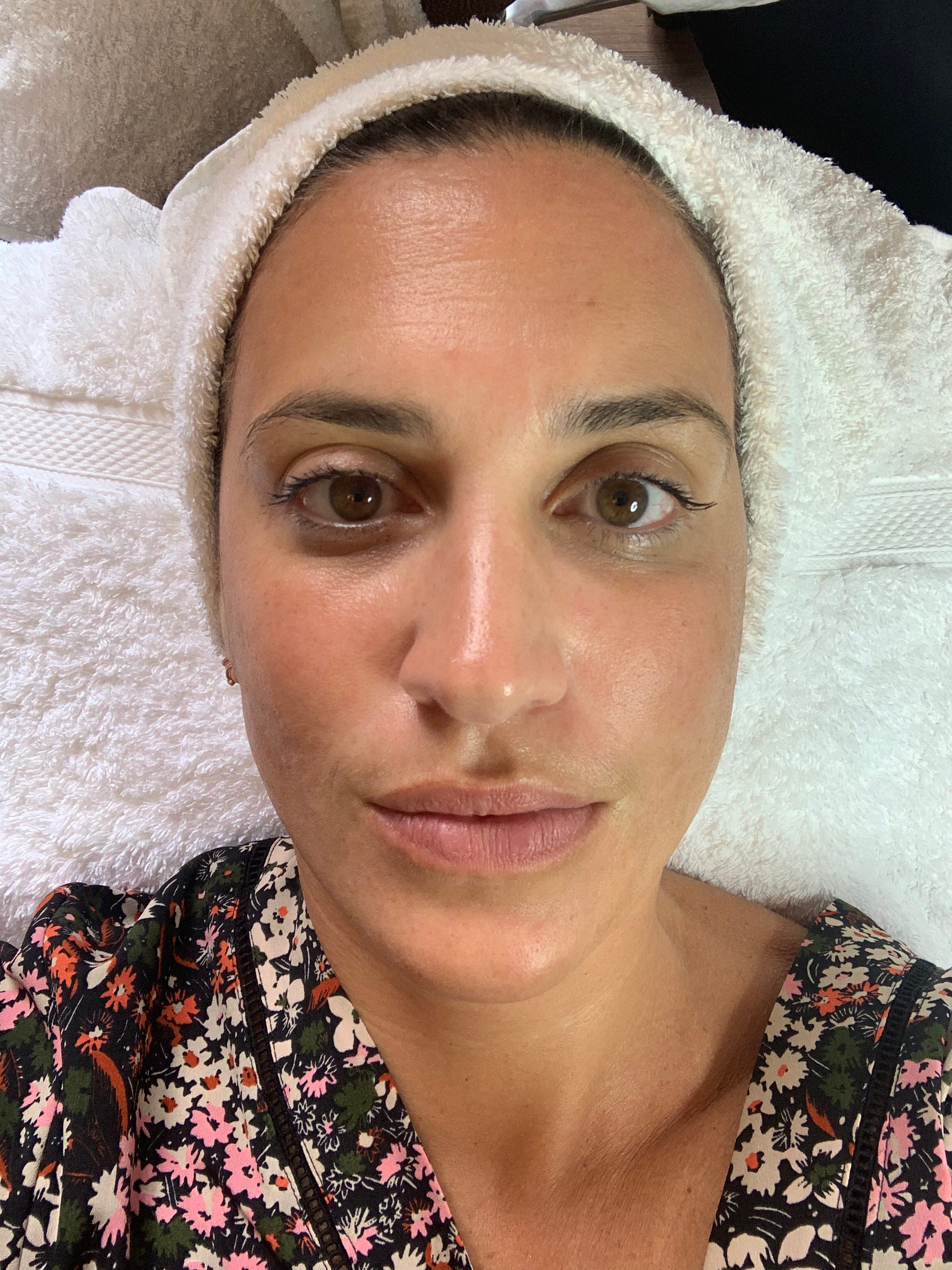
Fast forward 7 years, and my face fuzz got worse. I started taking testosterone about a year ago which definitely didn’t help - but I had already noticed a slow increase in facial hair as my forties went on. It’s that annoying fine fuzz that catches the light!
So a few weeks ago, during a grocery shop with my mum, I made an off-the-cuff decision to buy a dermaplaner by Japonesque. It stood out as it came with 2 spare blades and had a cooling rollerball on the end.
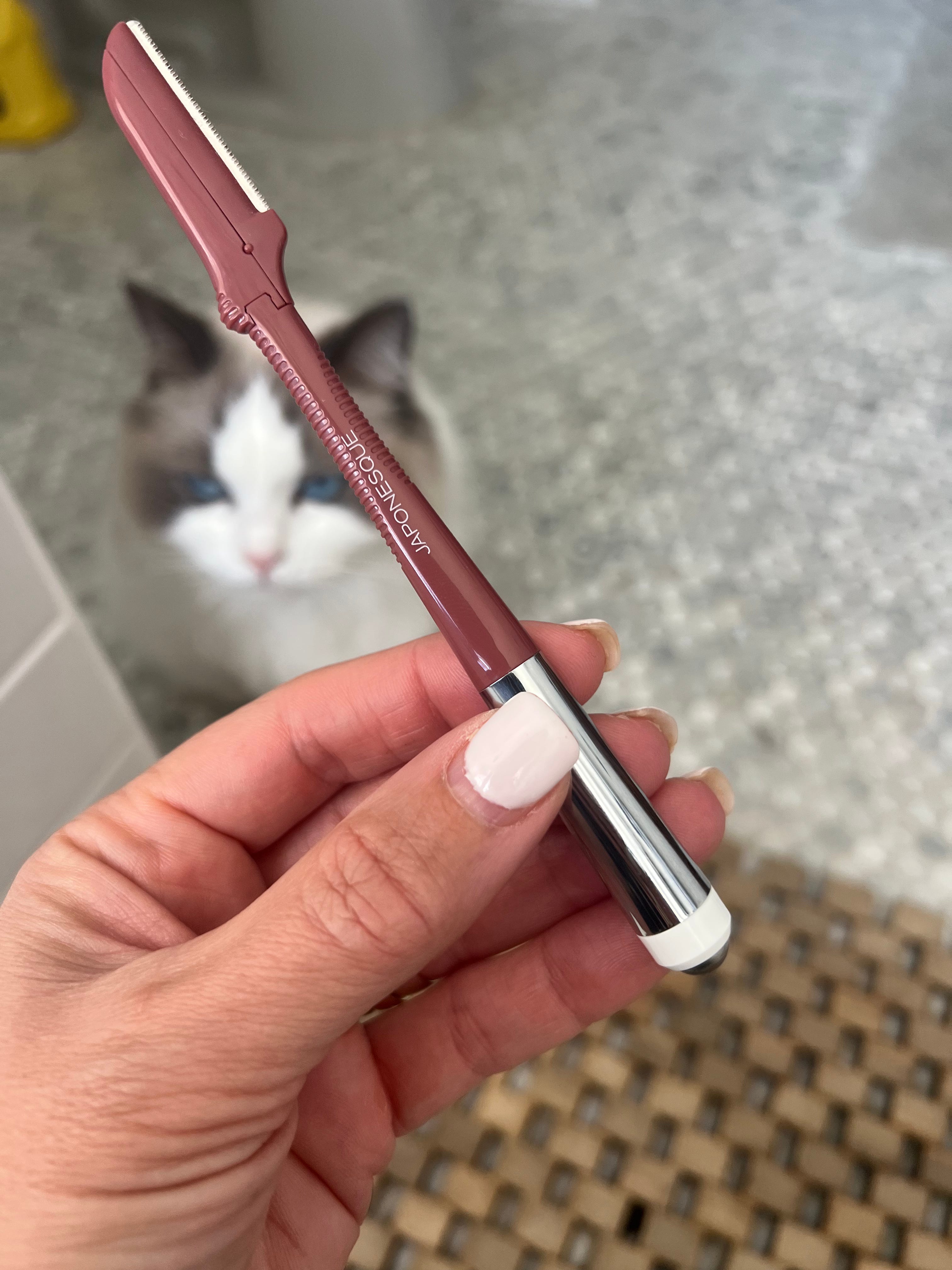
That night, I decided to try it at home. I couldn’t believe how easy it was - it took all of five minutes and it felt so relaxing too. The blade doesn’t feel sharp - it’s just like running a smooth fingernail over the surface. It felt really relaxing too.
Afterwards, my skin felt so soft and smooth, and it definitely looked brighter - more even. You notice how much better your skincare absorbs too. It makes it feel hydrated and bouncy.
🎬 Watch my first at-home dermaplaning session on Instagram here!
Does dermaplaning make hair grow back thicker?
This is the number one question I get, and the answer is: No. Dermaplaning cuts the hair at the surface level. It does not change the hair follicle or the biology of your hair growth. It’s a complete myth that it returns thicker or darker. Understood? Good lol!
The main benefits of dermaplaning for skin over 40
If you’ve noticed increased facial hair due to hormone therapy or menopause, dermaplaning is a game-changer. It’s not just about the hair. Dermaplaning is a physical exfoliant as it gently removes the top layer of dead skin cells and debris. This helps to:
Absorb skincare better: Your serums and actives actually reach your pores instead of sitting on a ‘carpet’ of hair and dead skin cells.
Add glow: Removing that dulling layer reveals radiant, newer skin.
Prime skin for makeup: Your makeup base sits flawlessly without clinging to peach fuzz.
A Note of Caution: My favourite Consultant Dermatologist, Dr. Justine Kluk, warns that dermaplaning should be avoided if you have active inflammatory skin issues like acne or eczema.
How to Dermaplane at Home
After asking Amy Anzel, founder of the best-selling dermaplaning brand, Hollywood Browzer, and experimenting myself, here is the foolproof method:
1. Start with ‘Squeaky Clean’ Dry Skin
Never dermaplane on wet skin as it causes irritation. While some TikTokers suggest using oil, I don’t advise it. It makes your hands slippery (dangerous!) and stops the blade from catching the hair effectively. Plus oil could cause irritation.
Pro Tip: Amy suggests wiping a cotton pad soaked in toner over the skin first to ensure every trace of oil is gone.
2. The ‘Melted Butter’ Technique
Hold your skin taut with one hand to avoid nicks. And with the other hand holding the tool, use short, feathery downward strokes at a 45-degree angle.
The Pressure: Amy likens the motion to ‘spreading melted butter on a bagel.’ Let the tool do the work; there is no need to press hard.
3. Navigate the Contours
For tricky areas around the lips and chin, stick your tongue inside your mouth to flatten the skin and “uncurve” the contours.
4. Clean as You Go
Wipe your blade on a dry tissue after every few strokes. You’ll be shocked at the amount of hair and dead skin that comes off. Keeping the blade clean also ensures constant friction too.
5. Post-Care Hydration
After dermaplaning, your skin is like a sponge, so hydrate it! I immediately apply a Hyaluronic Acid serum followed by a rich moisturizer. Avoid active acids (like Retinol or AHAs) for 24 hours to prevent irritation.
Don’t forget to:
Replace your blades: Even if it’s still cutting hair, a dull blade causes irritation. Most brands recommend a fresh blade every 3 months.
Sanitize: Use an anti-bacterial spray or witch hazel to clean the tool before putting it away.
I chat all about my dermaplaning ‘journey’ on my podcast, Smiling Gives You Wrinkles®…
Do you dermaplane at home, or are you still a bit nervous about the blade? Let me know in the comments!