


If you opened Instagram or TikTok last week, there’s a chance your feed was taken over by dramatic and scary headlines about one of my favourite (and most recommended) skincare brands, CeraVe.
My DMs blew up with screenshots showing viral posts that screamed headlines like: “CERAVE SUED FOR CANCER-CAUSING CHEMICALS.” It even sent me into panic mode - the Beauty Editor that knows that a lot of the time these headlines are just there to scare-monger and for click-bait. But, I get it. When an infographic shows stock images of the products sitting on your bathroom shelf, it’s bound to cause concern.
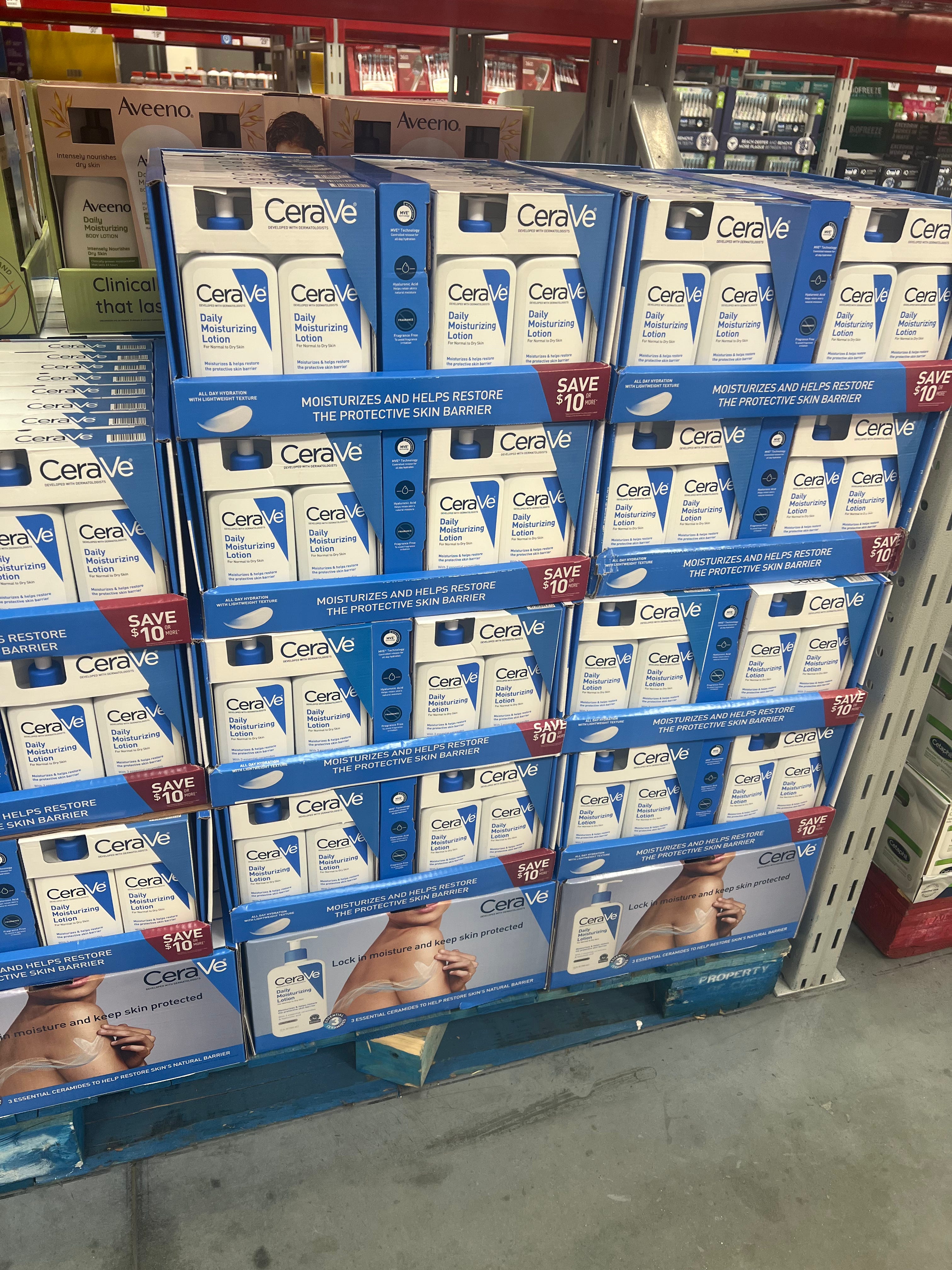
For me, the headlines hit close to home. Anyone who follows me or reads The Beauty Ed® knows that I am a massive CeraVe fan. I don’t just test and review their products on my socials; I bulk-buy bottles of their Moisturizing Lotion for my household. My sons use their skincare, and my eldest loves their Anti-Dandruff shampoo - it’s a permanent fixture in his shower.
So before you, or I, throw our beloved CeraVe into the bin, I wanted to look at the actual facts and science behind these scare-mongering headlines.
Firstly, I must point out, that this story isn’t new. The wave of panic surrounding CeraVe originally began when independent lab reports were published in early 2024. It has resurfaced recently due to all of the ongoing class-action lawsuits moving through the courts in 2026.
To help me get to the facts, I reached out to the brilliant consultant dermatologist Dr. Nicole Chiang, who I recently invited onto my podcast, Smiling Gives You Wrinkles®. She explains what is exactly going on, what the headlines got wrong, and why you don’t need to panic.
1. The CeraVe Lawsuit is an Ingredient Issue, Not a Brand Issue
The absolute biggest flaw in the viral posts circulating right now is that they use images of standard CeraVe lotions, cleansers, and baby products to grab your attention.
Here is the truth: The lawsuits and underlying scientific reports are exclusively targeting products that contain one specific active acne ingredient: Benzoyl Peroxide (BPO). In CeraVe’s range, this only applies to two specific acne treatments: their Acne Foaming Cream Cleanser and Acne Foaming Cream Wash.
Is standard CeraVe safe? Yes. If your CeraVe product does not have Benzoyl Peroxide listed on the back - if it’s your daily Hydrating Cleanser, your Moisturizing Lotion, or your shampoo - it is completely untouched by this issue. There is zero benzene risk in standard formulas powered by ceramides, hyaluronic acid, or niacinamide. Your daily staples are perfectly safe.
2. The Science: Why is Benzoyl Peroxide in the News?
So, what is the actual issue with Benzoyl Peroxide?
“Benzoyl peroxide can degrade into benzene under certain conditions, particularly when products are exposed to elevated temperatures for prolonged periods,” explains Dr. Nicole Chiang. “Benzene is a known human carcinogen, which is why these findings have generated concern.”
Essentially, the Benzoyl Peroxide molecule is inherently unstable. If a product containing it is exposed to extreme heat - like being left in a really boiling hot car, stored in direct sunlight, or kept right next to a really hot radiator - it can break down and form benzene. The recent legal drama is based on allegations that these products can become unstable during transit or warm storage conditions before they put on the shelves to be bought.
3. The Reassurance: What Did the FDA Find?
While that sounds frightening, the actual data is reassuring. This isn’t a wildcard ingredient that’s just come out of nowhere; it is one of the most heavily regulated and intensely studied molecules in skincare.
Dr. Chiang urges us to look at the broader picture:
“It is important to put this into context. Benzoyl peroxide remains a well-established and highly effective acne treatment that continues to be recommended by dermatologists worldwide. In March 2025, the U.S. Food and Drug Administration (FDA) tested 95 acne products containing benzoyl peroxide and found that more than 90% contained undetectable or very low levels of benzene. Six products were found to have elevated benzene levels and were voluntarily recalled by their manufacturers.”
Dr. Chiang also points out a major safety buffer when it comes to the specific CeraVe products in question: they are wash-off formulas.
“CeraVe’s benzoyl peroxide-containing products are rinse-off cleansers rather than leave-on treatments,” Dr. Chiang notes. “As these products are washed off after a short contact time, overall exposure would generally be expected to be lower than with leave-on formulations.”
4. Should We Stop Using Benzoyl Peroxide?
If you or your teenagers rely on a Benzoyl Peroxide cleanser to help control breakouts, the expert medical consensus is clear: No, you do not need to stop.
“Current dermatology guidelines continue to recommend benzoyl peroxide as an effective treatment for acne,” says Dr. Chiang. “In addition to reducing acne lesions, benzoyl peroxide plays an important role in helping to reduce bacterial resistance when used alongside topical or oral antibiotics. This is one of the reasons it remains a cornerstone of acne management.”
Instead of abandoning an ingredient that works, the real solution comes down to how we treat and store our products. “The key takeaway for consumers is that proper storage matters,” Dr. Chiang emphasizes. “Benzoyl peroxide products should be stored according to the manufacturer’s instructions and protected from excessive heat.”
5. How to Store Skincare Safely: The New Golden Rules
To keep your bathroom completely safe and give yourself total peace of mind, Dr. Chiang recommends following these straightforward rules:
Keep it Cool: Store benzoyl peroxide products according to the manufacturer’s instructions, ideally at room temperature or cooler. Avoid leaving products in hot environments such as cars, near windows, or in direct sunlight.
Watch the Thermometer: Discard products that have been exposed to excessive heat (e.g., greater than 78°F / 25°C). (If you live somewhere hot like me in Florida, or your bathroom gets incredibly steamy, consider storing your acne washes in a cool pantry or even the fridge!)
Refresh Your Stash: Replace your active benzoyl peroxide products every 10–12 weeks. Do not let old acne treatments sit in your cupboards for months or years on end.
Know Your Alternatives: “If you are concerned about using benzoyl peroxide, speak with your dermatologist about alternatives such as adapalene, salicylic acid or azelaic acid,” advises Dr. Chiang.
Why We Need To Move From “Clean Beauty” to Evidence-Based Beauty
This entire story taps into a much larger issue: the anxiety-driven world of “Clean Beauty.” As a beauty editor, I have always been vocal about the fact that fear-mongering shouldn’t dictate your skincare. As you can see in this article that I wrote for The Sun newspaper’s Fabulous Magazine about 15 (!) years ago…
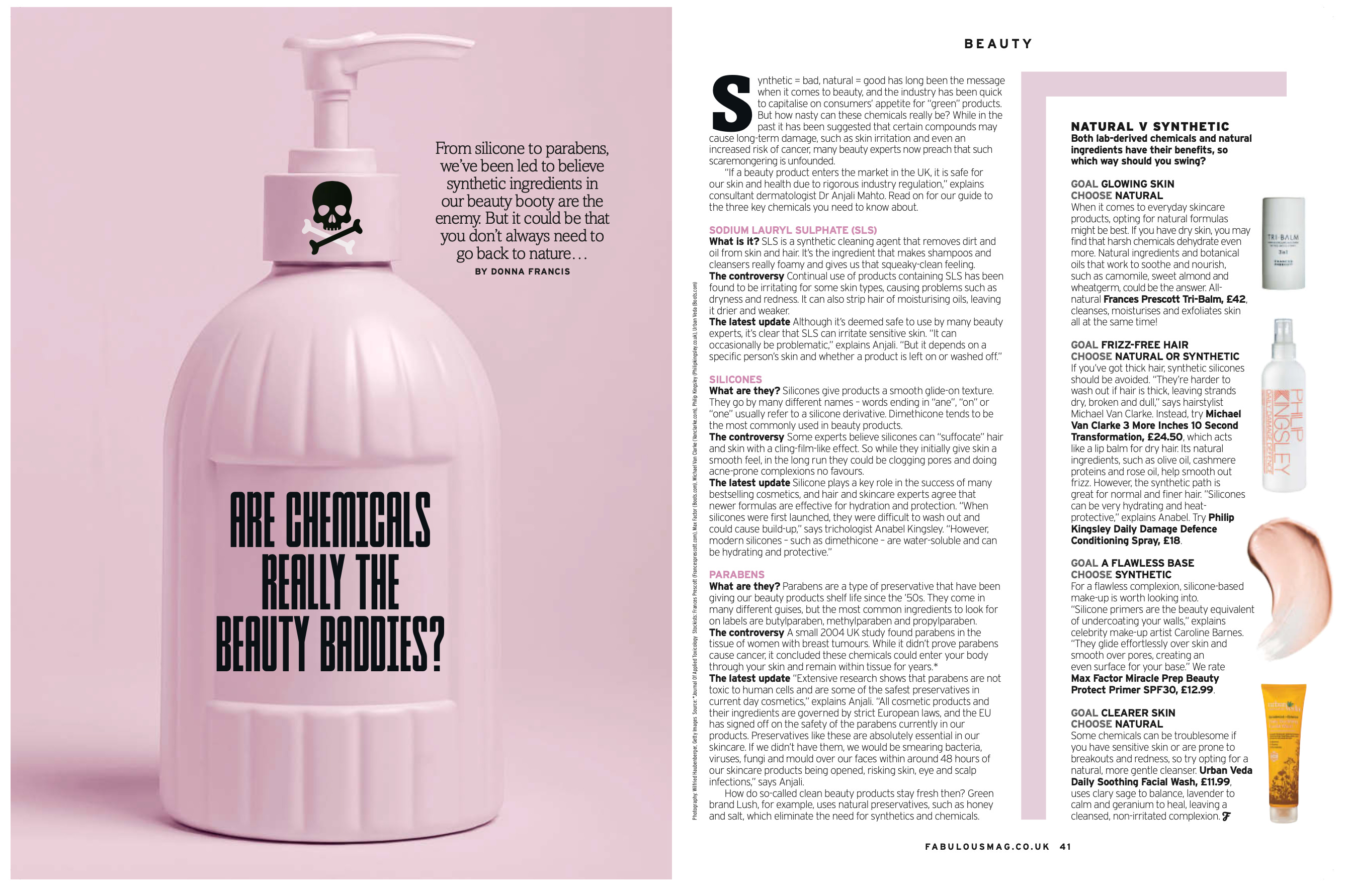
And Dr. Chiang agrees entirely.
“Clean beauty’ is largely a marketing term rather than a scientific or regulatory one,” Dr. Chiang clarifies. “An ingredient is not safer simply because it is natural, and it is not harmful simply because it is synthetic. What matters is the quality of the evidence, the formulation, the concentration, and how the product is used. From a dermatology perspective, I encourage consumers to focus on evidence-based beauty, rather than clean beauty.”
When we look at the actual scientific evidence, regulatory bodies like the U.S. FDA, the UK’s Office for Product Safety and Standards (OPSS), and the European Commission’s SCCS are constantly monitoring, testing, and restricting ingredients to keep us safe.
And the list of ingredients that have rock-solid, undisputed evidence supporting both their safety and efficacy when used as directed? It includes the gold-standard ingredients we love: ceramides, glycerin, hyaluronic acid, niacinamide, salicylic acid, retinoids, and yes - benzoyl peroxide when stored correctly.
The Bottom Line: You do not need to throw away your bulk-bought CeraVe lotions. My family will absolutely keep using ours. If you use their acne wash, just keep it out of the heat, replace it regularly, and rest easy knowing that real science always trumps a scary 15-second video.
Frequently Asked Questions About the CeraVe Lawsuit
Why is CeraVe being sued?
Certain CeraVe acne products are involved in class-action lawsuits following reports that the active ingredient, Benzoyl Peroxide (BPO), can degrade into benzene - a known carcinogen - when exposed to high heat over prolonged periods. Standard CeraVe lotions and cleansers do not contain this ingredient and are not part of the lawsuits.
Does standard CeraVe Moisturizing Lotion cause cancer?
No. Standard CeraVe formulas - including the Daily Moisturizing Lotion, Hydrating Cleanser, and shampoos - do not contain Benzoyl Peroxide. Because they are powered by ceramides, hyaluronic acid, and niacinamide, they carry zero risk of benzene degradation and are completely safe for daily use.
Is Benzoyl Peroxide banned by the FDA?
No, the FDA has not banned Benzoyl Peroxide. In March 2025, the FDA tested 95 acne products containing the ingredient and found that more than 90% had undetectable or low levels of benzene. Only six products with elevated levels were voluntarily recalled, and dermatologists continue to recommend it as a gold-standard acne treatment.
I’d love to hear from you in the comments! Did this headline pop up on your feed at all? Has it made you rethink how you store your active skincare? Let’s chat below!