


Black Friday is driving me nuts right now and deals on LED masks are coming at me thick and fast. And it seems everyone is obsessed with buying one.
And I get it. You can’t scroll through Instagram without an influencer ‘influencing’ you to invest, and their sell is convincing.
LED masks look robotic and science-y so they must work right? Plus influencers and celebrities show that if you really want to make one part of your skincare regime, they can blend into your routine quite conveniently. As long as you don’t mind looking like a lit up Hannibal Lector while doing the chores. Or in my case, basting a turkey for Thanksgiving ha ha…
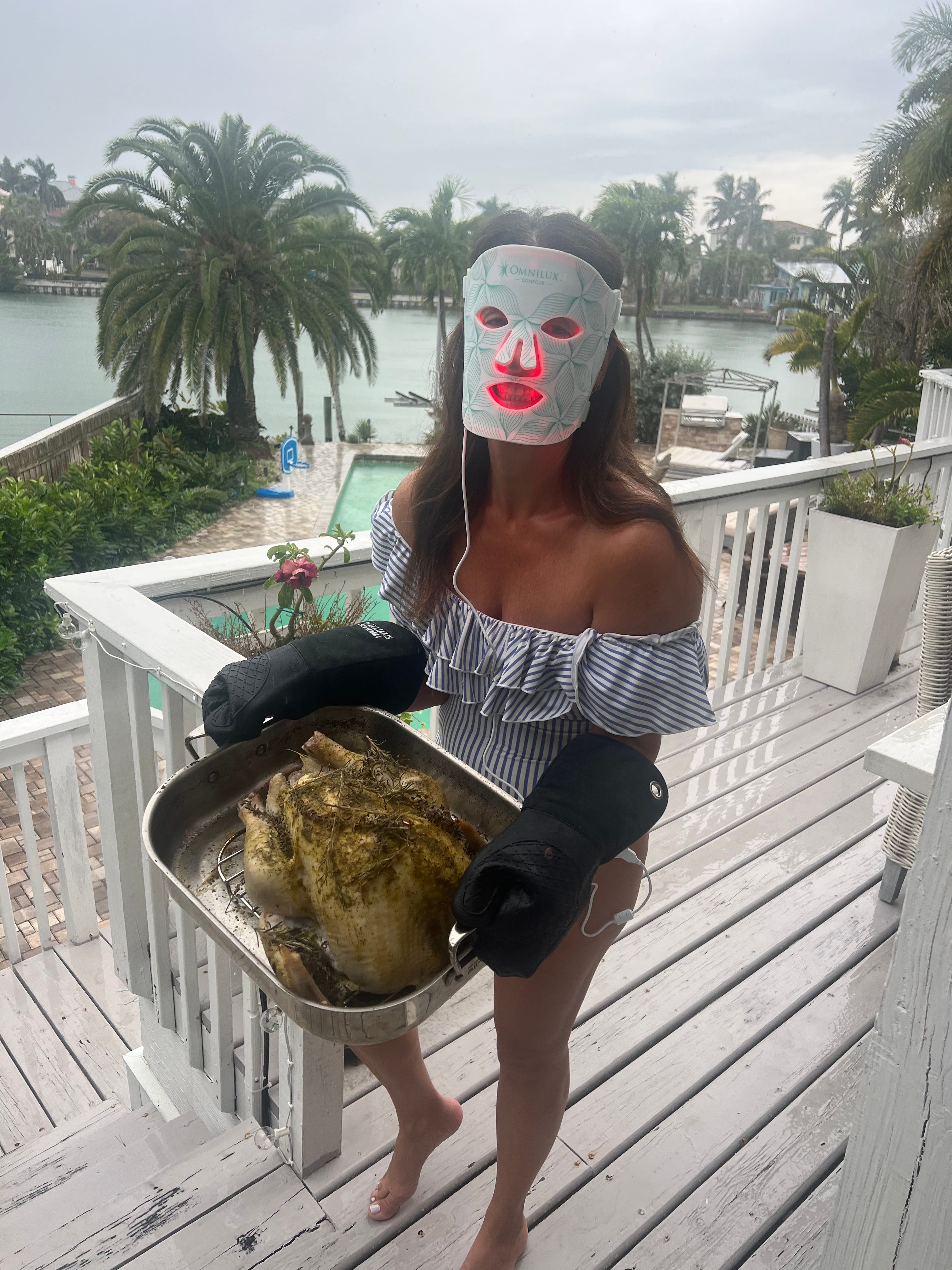
To be honest, it’s this over saturation of LED Face Mask #ads on Instagram and Tik Tok that make me question their claims. It’s a ripe market for manufacturers and influencers to cash in on the trend.
Plus LED masks are expensive. The cheapest I could find was this one by Skin Gym that costs around $100. While the most expensive can set you back $4000!


Is it worth making LED part of your skincare routine?
I have a couple of LED masks gathering dust in my bathroom draw. I like the look of Omnilux Contour Face LED Mask as it’s bendy and lightweight - so likely way more comfortable than the stiff-straightjacket style ones.
I also have the CurrentBody LED Light Therapy Mask. This is a brand that I trust and rate as like Omnilux, they are FDA approved so the claims they make are actually true.
To help me make a calculated and informed decision before I introduce an LED mask into my routine, I asked my friend and renowned dermatologist Dr. Justine Kluk to chat about it on my podcast, Smiling Gives You Wrinkles.
Here’s what she had to say:
What Does an LED Mask Actually Do for Your Skin?
“LED stands for light emitting diode. These are basically energy sources that are able to produce specific wavelengths of light and the mitochondria, the energy centers in our cells are able to absorb these specific wavelengths of light and act as energy centers, so creating energy for the rest of the cell. And that can help things like boosting collagen production, calming inflammation, repair and healing.”
Red Light Therapy: Real Results or Just Hype?
“It’s not a new thing. It’s been around for quite a long time. Traditionally the LED technology was predominantly used in clinics and hospitals for treating things like pre-cancers and superficial skin cancers.”
“One of the things that has been noticed about the red light is that it has other benefits for the skin. So it can help with reducing redness, with calming inflammation, with stimulating collagen.”
How Blue vs Red LED Light Works
Blue Light (for acne)
“What the blue light does is it creates these unfavorable conditions in the skin for bacteria… the bacteria is not able to thrive and can’t create inflammation in the skin.”
Red Light (for ageing & healing)
“It helps then when red light is shone on the skin to direct the light to the abnormal cells… and the red light can then go and clear away pre-cancers.”
Do LED Masks Really Work for Anti-Ageing?
“If you are someone who is wanting to support healthy skin aging and improve glowiness of your skin and radiance and boost collagen, then it seems more reasonable to try one of these at home devices.”
“What it might eventually deliver to you is not going to be wow-factor stuff. In most cases, there’s going to be slow, gradual, modest improvement in your skin.”
LED Mask vs Skincare: Which One Works Better?
“Sunscreen is number one, then an antioxidant serum and then using a retinoid. There is oodles of evidence that safe sun protection, antioxidant serums and retinol products are helpful at slowing those signs of skin aging and promoting healthier looking skin. And I would definitely prioritize those things.”
Are LED Masks Worth It for Menopause Skin?
“If you are someone who is wanting to support healthy skin aging… it seems reasonable to try one of these at home devices.”
Can At-Home LED Treat Acne or Rosacea?
“If someone was trying to treat an inflammatory skin condition like acne or rosacea, I would say you’re still better off seeing a doctor.”
“Don’t rely on it as an acne treatment… a lot of the times it doesn’t deliver the goods and if you try and it’s not working, do get some more support.”
Are At-Home LED Masks As Good as In-Clinic LED?
“Probably not because they’re less powerful, they’re going to give a lower dose.”
How Often Should You Use an LED Mask?
“You have to use it every day and have a long-term commitment to it. If you are prepared to invest the money and as long as you’re doing everything else, it’s a nice to have.”
What Dermatologists Really Think About LED Masks
“I think there’s a broad consensus amongst dermatologists - most dermatologists in the UK particularly - that the impact that you would get from an at home device is probably a lot smaller [than an in-clinic device]. It’s modest, it’s very slow and gradual. It’s definitely not a must-have, and I think a lot of the marketing makes people think it’s a no brainer.”
Using LED Masks On Hands, Neck, Chest & Body
“They seem to be launching them for every part of your body as well. For your hands, for your neck, for your décolletage. If you are able to use your existing mask and you can apply it to another part of your body without buying a separate device, I think probably you could do that.”
Should You Use LED Masks With Retinol?
“The LED mask will often carry a warning which says, don’t use retinoids, so then if it’s a choice between using a retinoid and using the mask, I would definitely go for the thing that has the most evidence.”
“I know there are some people who use their LED mask and a retinoid even though the warning label says not to - but I certainly don’t want to take responsibility for telling people it’s okay.”
Who Should Not Buy an LED Mask?
“If you are someone who’s very time poor. If you don’t want to wait months to get a very modest benefit and if you don’t have the budget for a multiple hundreds of pounds or dollars device, then probably there are other things that you would prioritize.”
After listening to Justine question the efficacy of LED masks in everyday life, I must say it made me a bit skeptical.
But then I asked my Instagram community their thoughts.
And dozens of women that I trust - who really know their skin - told me that they swear by their LED masks.
They talked about improvements to skin texture, breakouts, pigmentation, rosacea, menopause skin sensitivity, even mood. Apparently the ritual alone is soothing enough to warrant the commitment.
Cue my curiosity.
Cue me deciding to give mine a try...
So today is the day I start. It’s Thanksgiving why not?
I will be documenting what happens when a formerly skeptical Beauty Editor gives LED therapy a go. Because I want to know if at-home LED masks actually work. I want to know whether red light therapy does anything for my menopausal skin.
Thanks for reading The Beauty Ed® ❤️ All the content is free so please consider subscribing as it really helps to support my work and keep independent, honest and truthful beauty journalism alive ♡
My LED Mask Comeback Plan
I’ll try to use the mask everyday but promise to do it three to five times a week, consistently.
I’ll pair it with my already existing simple routine - retinol at night, vitamin C and SPF in the morning - to see whether LED genuinely adds anything.
I’ll track and picture any changes to texture, fine lines, glow, breakouts, and overall skin mood.
We’re in an era where we are bombarded with devices - microcurrent, radiofrequency, LED, lasers - each promising to boost collagen and turn back the clock.
But very few of us have the time, money, or energy to try everything. So we rely on each other.
Real women. Real experiences. Real results.
That’s why this little experiment feels worth doing.
If you’ve used one and love it, tell me why. If you tried one and sold it on Vinted or Ebay, tell me that too.
And if you happen to also celebrate Thanksgiving in a swimming costume while attempting a skincare routine you’re not sure you believe in - well, then I think, if you haven’t already, you should subscribe to my substack ha ha
Donna x 🦃✨💡
Click below to hear the full chat with Dr. Justine Kluk on Smiling Gives You Wrinkles.
Such a great article! So important for those who are keen to learn more but don’t know where to start xo