


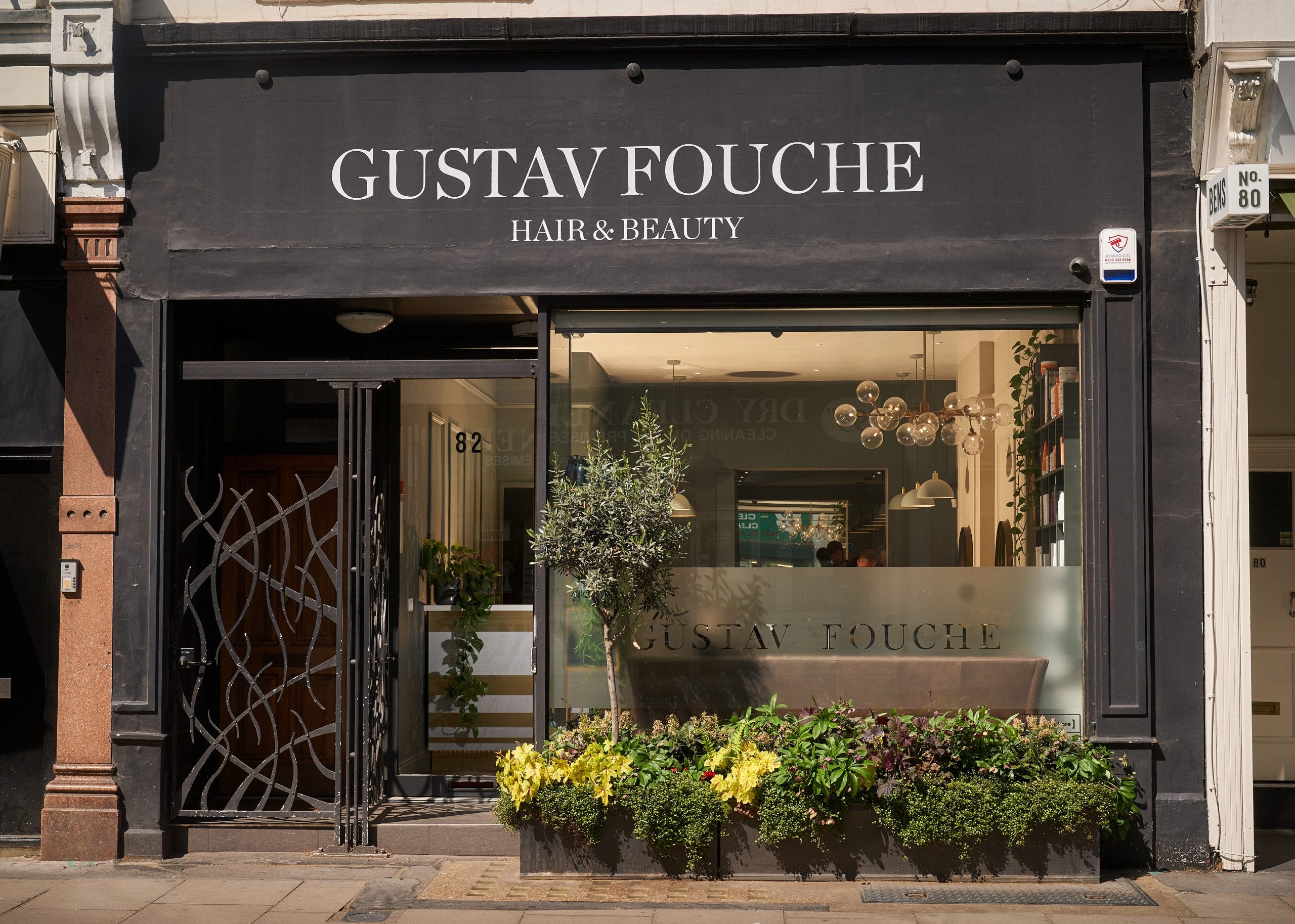
Just beyond the bustle of Westbourne Grove in London’s Notting Hill sits Gustav Fouche’s Salon, a chic, light-filled space known for its celebrity clientele and its precise 3D dry cutting technique. Intrigued by the promise of cutting hair dry rather than wet, I tried the £250 3D cut. At 21, I don’t say this lightly: it may be the best haircut I’ve had.
What Is a 3D Dry Cut?
Unlike traditional wet cutting, the 3D technique is performed entirely on dry hair. The rationale is simple: hair behaves differently once dry, the texture lifts, and volume expands. Cutting it wet can mean shaping it without fully seeing how it naturally falls.
Why Dry Cutting is Better Than A Wet Cut
On textured, wavy-curly hair like mine, that distinction matters. Dry cutting allows the stylist to assess weight distribution, density, and movement in real-time. As Gustav explains, many London salons are shifting towards dry cutting because “when you cut hair wet, you’re virtually cutting it blind.” Experiencing the process first-hand, I understood entirely what he meant.
The Appointment
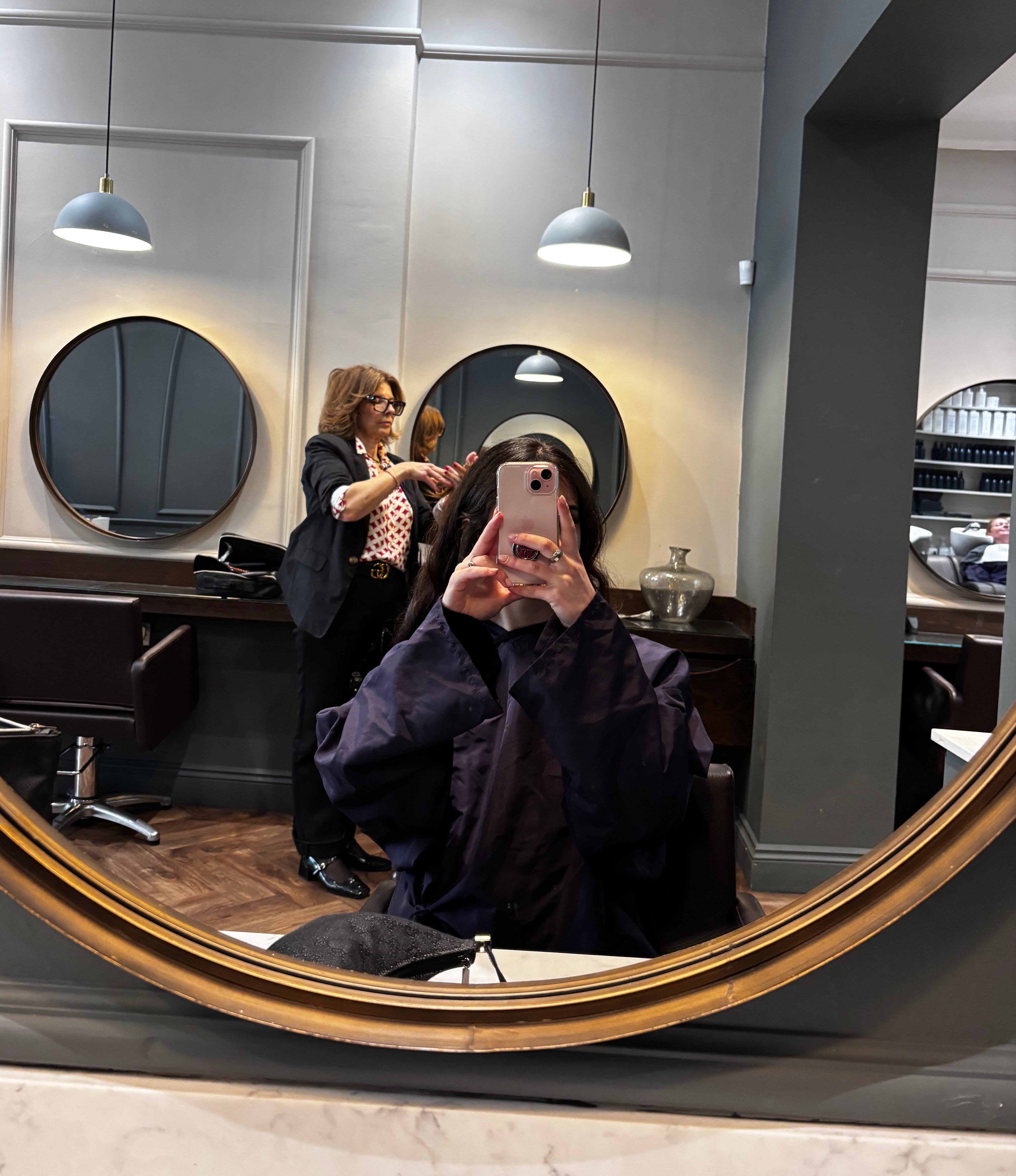
The consultation was thorough and refreshingly specific. We discussed how I wear my hair most days (natural, air-dried), what I dislike (excess heaviness at the crown), and what I do not want (over-thinning or loss of length). My main frustration was that my hair felt shapeless, voluminous, yes, but without structure.
Gustav began by brushing my hair out fully dry (a moment that any curly-haired girl knows can feel mildly feral) before sectioning it with an almost geometric precision. The detail was meticulous; each section was cut in relation to how it sat on my head.
To the untrained eye, mid-process can feel ambiguous. What I noticed first wasn’t shape, but rather it was lightness. The heaviness at the top began to dissolve. But it was during styling that the structure revealed itself.
The Wash and Finish
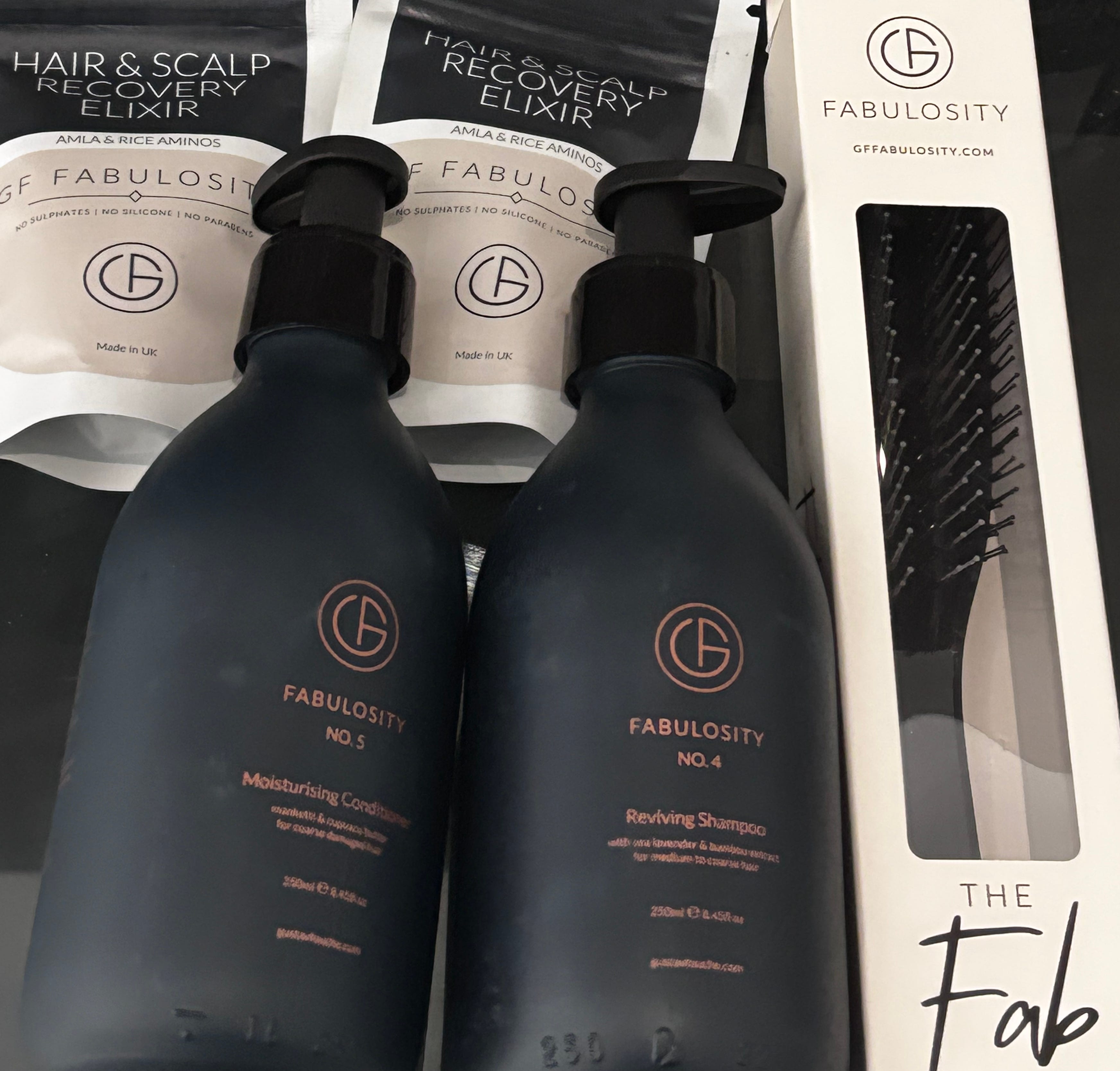
After the cut, my hair was washed using products from Gustav’s Fabulosity range, selected based on my texture and dryness levels.
Why are Silicone-Free Shampoos Better?
The Reviving Shampoo (£44) is designed to smooth and strengthen without coating the hair. Many traditional formulas rely on silicones to create shine by forming a water-repellent film around the strand. While that can temporarily reduce frizz, it can also lead to build-up, preventing moisture from properly penetrating the cuticle over time. Silicone-free formulas like this reviving shampoo aim to avoid that cumulative weight.
The Moisturising Conditioner (£44) rich and curl-focused, provided the hydration my hair typically lacks. The result post-blow-dry was noticeably glossy, but not heavy.
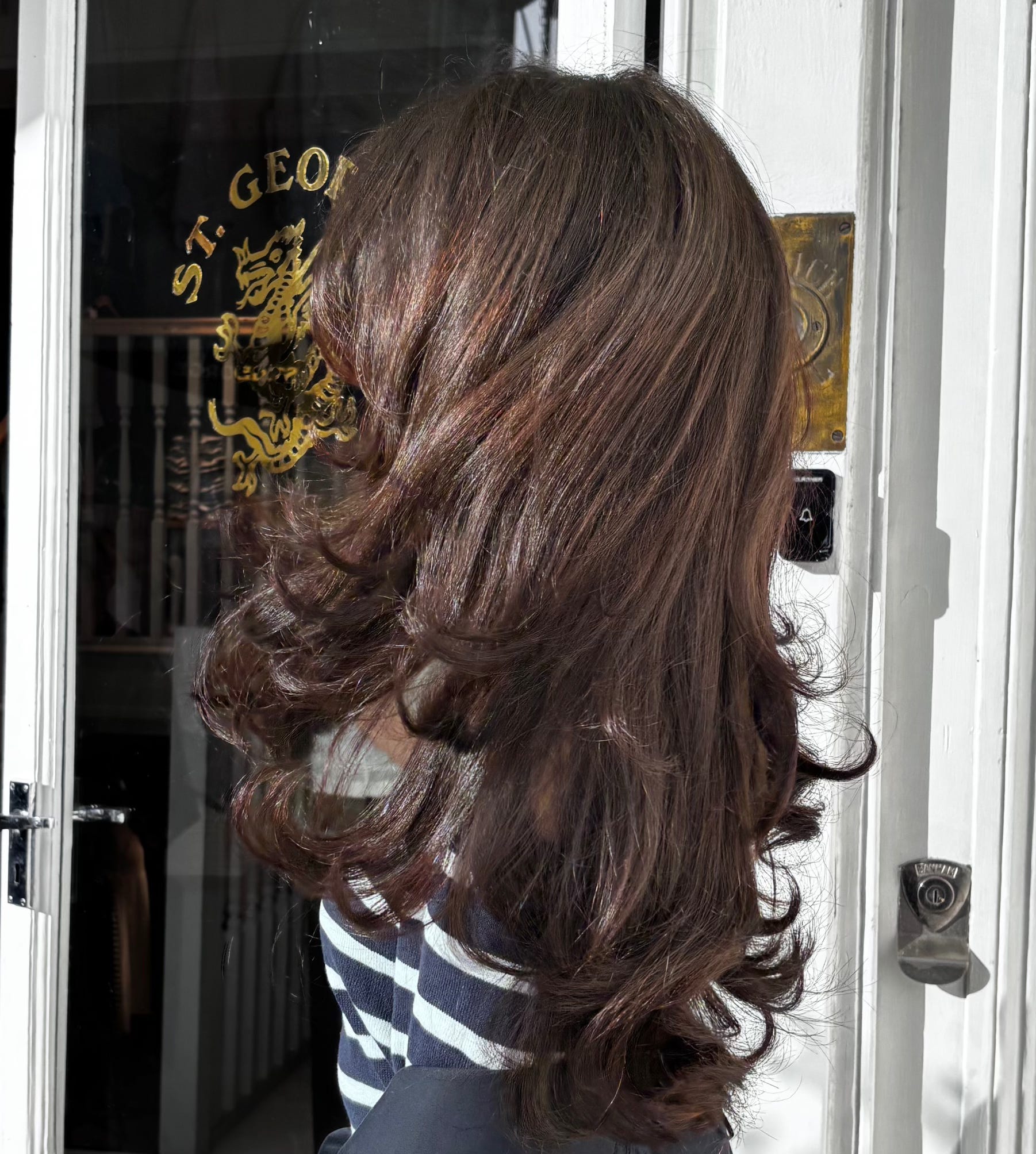
The final touch was a set of pin curls, a technique I’ve always loved for long, layered hair. Once brushed out, they created that soft, 90s supermodel movement: lift at the root, bend through the lengths, nothing overly “done”.
The Result🌟
The difference wasn’t dramatic in length; more so, it was structural. Face-framing layers coupled with volume redistribution rather than removal. My natural texture finally had proportion.
What surprised me most was how wearable the cut is without styling. When left to air-dry, my curls sit lighter and more defined, no longer collapsing into one dense shape. It feels less like I have “a lot of hair” and more like I have shape.
Pricing reflects the level of expertise involved, a cut with Gustav is £250, while appointments with other stylists start from £85. For textured hair in particular, the 3D dry cut offers something traditional wet cutting often misses: precision.
A good haircut shouldn’t just remove length, it should restore balance, and this one certainly did. After all, there is nothing a good haircut can’t fix!
Such gorgeous results!
Looks absolutely amazing🤩